Hello! My name is Ross Plyler, and I am based in the Collins & Lacy Greenville office. I'm excited to contribute to our Insurance Practice Group’s blog, and I wanted to take the opportunity to share an interesting case with you.
An environmental case that started in an Alaskan fishing village of less than two square miles and less than 400 residents landed in the Supreme Court of Virginia. That court issued an opinion that could impact the growing trend of climate change litigation.
Here is some background information:
 |
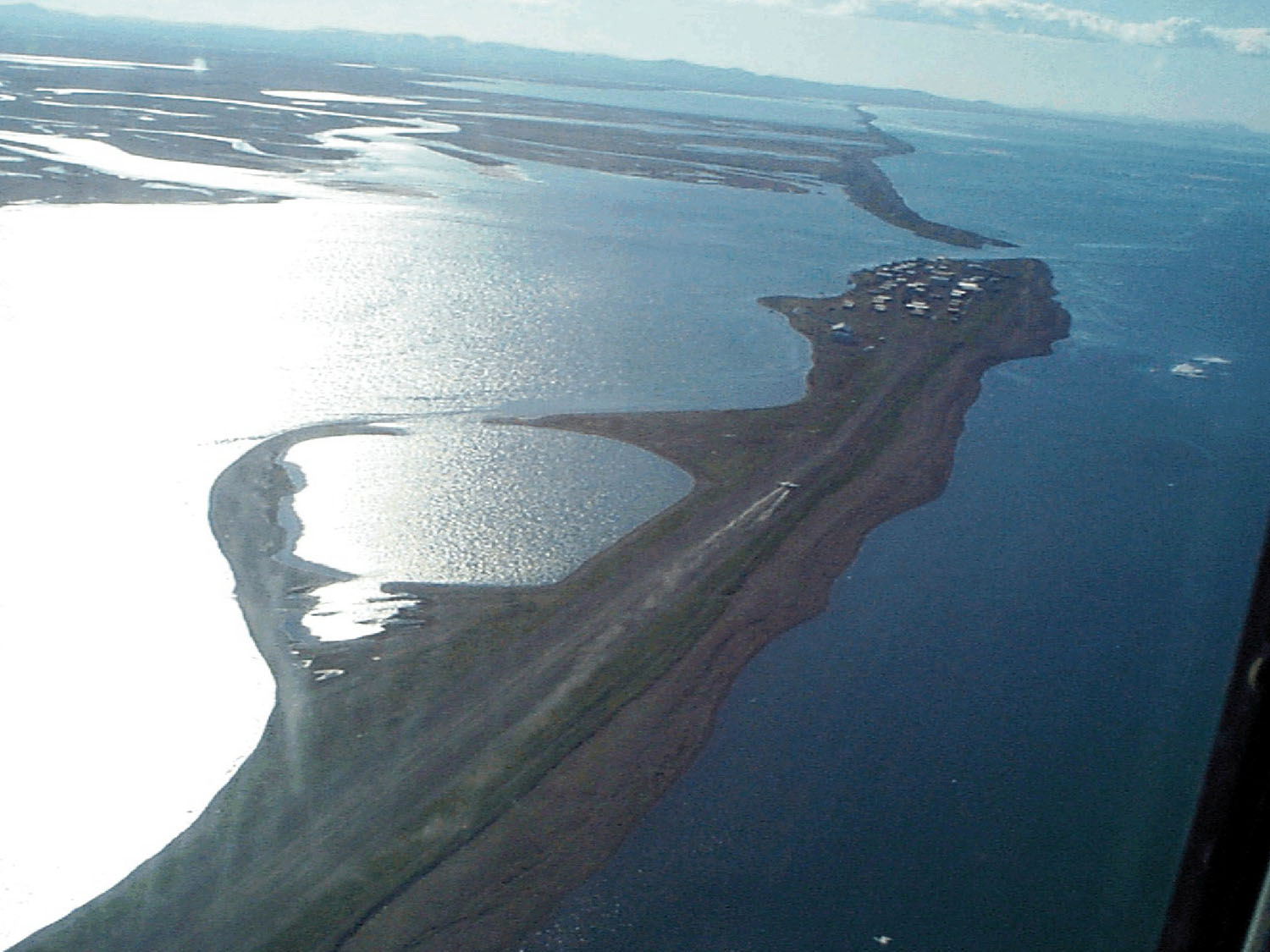
| Aerial view of Kivalina, Alaska, USA. View is to the southeast. |
Kivalina, an Alaskan barrier island 70 miles north of the Arctic Circle, filed suit in the U.S. District Court for the Northern District of California against numerous defendants, including AES Corporation (a Virginia energy company) alleging their emissions of greenhouse gases caused global warming and warmer winters, which in turn affected levels sea ice leaving their island exposed to erosion. AES tendered the suit to its insurer, Steadfast Insurance Company, and Steadfast filed a declaratory judgment action, The AES Corporation v. Steadfast Insurance Company. Steadfast argued there was no “occurrence” under the policy and thus no coverage or duty to defend the climate change complaint.
In the appeal, the court defines "occurrence" the same as an accident, which is an event that creates an effect that is not the natural or probable consequence of the insured’s actions, and is not intended, designed or reasonably anticipated. The court said the inquiry is whether the Kivalina plaintiffs allege the resulting harm (global warming) is a natural and probable consequence of an intentional act (emitting greenhouse gas). If so, there is no accident here and thus, no coverage. However, if global warming is an unforeseen or unexpected consequence, then it is an accident or occurrence, and there is coverage. The court said that because Kivalina alleged that there is “clear scientific consensus” that global warming is a natural and probable consequence of greenhouse gas emissions, then global warming is no accident, and thus not an occurrence, meaning no coverage.
In South Carolina, we don't worry too much about sea ice, but if climate change litigation is a trend, it is interesting to guess how our courts may deal with the issue of whether global warming is a "covered occurrence." You will have to wait until next time for the exciting conclusion!