logo

Showing posts with label Ross Plyler. Show all posts

Thursday, February 2, 2012

Is Your Golf Cart an Uninsured Motor Vehicle?

Post by Ross Plyler
With the growing use of golf carts outside the boundaries of golf courses, it is worth some discussion about whether a golf cart is a motor vehicle. If it is, could it be an “uninsured motor vehicle” under an automobile insurance policy such that an insured would have uninsured motorist (UM) coverage for property damage caused by a golf cart? 

A typical auto policy pays for damages for bodily injury or property damage a covered person is legally entitled to collect from the owner of an uninsured motor vehicle. This is UM coverage. South Carolina Code § 56-9-20 defines “motor vehicle” as “every self propelled vehicle which is designed for use upon a highway.” While the statute lists some very specific exceptions to the definition, golf carts are not among the exceptions. This means that if a golf cart meets the definition of a motor vehicle, it could also be an “uninsured motor vehicle” entitling the victim of golf cart mayhem to UM coverage.

The one case in South Carolina that may be instructive is Anderson v. State Farm Mutual Insurance Company, 314 S.C. 140, 442 S.E.2d 179 (1994). In this case, an insured vehicle collided with an uninsured farm tractor, killing the driver of the tractor and injuring the insured driver. The driver of the automobile filed a declaratory judgment action seeking a declaration that a farm tractor is a “motor vehicle” under the UM statute. The Court said a tractor was not a motor vehicle under the statute and was properly excluded from coverage. The Court of Appeals affirmed stating that even though a tractor may incidentally or occasionally enter the highway, “a vehicle must be designed to operate on the highway in order to come within the term ‘motor vehicle’” (emphasis added).         

Under the same analysis, a golf cart may enter roadways incidentally or occasionally, but it may not be specifically designed for that use. Traditionally, golf carts were instead designed for a fairly specific recreational purpose on closed designated pathways. This may not be true any longer, as golf carts get “souped-up” and are used more and more off the course.

The Anderson court also makes a point to say that the UM statute is not intended to apply to injuries inflicted by vehicles that are not subject to registration or compulsory insurance requirements. However, golf carts, at least if you want to drive on the roadways, are subject to mandatory registration requirements. South Carolina Code § 56-3-115 requires purchase of a $5.00 permit to drive a golf cart on secondary roads within two miles of the residence during daylight hours. If the owner seeks to permit a golf cart, he or she must also provide proof of insurance. Under Anderson, if golf carts have a registration along with an insurance requirement, this may mean that golf carts are subject to the uninsured motorist statute. However, the Anderson court also says “the fact that farm tractors are subject to statutes regulating traffic on the highway, does not convert farm tractors to motor vehicles for insurance purposes.” This seems to be an open question here, and it raises interesting questions in determining what exactly is a “motor vehicle.” FORE!

Thursday, October 27, 2011

PART II: Courts struggle with Whether Global Warming is “Natural and Probable”

Post by Ross Plyer
Last time, we discussed The AES Corporation v. Steadfast Insurance Company, a recent Virginia case where the growing trend of climate change nuisance cases intersected with the world of insurance coverage law. Critical to the coverage analysis was whether the Plaintiffs in the underlying action, the tiny island village of Kivalina, Alaska, alleged an accident or occurrence, which the Court defined as something that is not the natural or probable consequence of the insured’s actions.

This case centers on the "accident" definition, so let's compare how each state defines it.
  • The Virginia definition says an "accident" is a result that is not natural and probable.
  • South Carolina defines an "accident" as a result that is unexpected and occurs by chance.
Is it two ways of saying the same thing? How might this case have played out in an Palmetto State court?

In the Virginia case, the court decided the plaintiffs alleged that AES intentionally released greenhouse gas and had good knowledge that those emissions caused global warming.  Thus, global warming was the natural and probable result of their actions, and thus not an accident. A South Carolina court could look at the same actions and find that Kivalina accused AES of emitting greenhouse gas with the knowledge of its effects. Because the result was not unexpected and not occurring by chance, there is no accident. Using a slightly different standard, a South Carolina court could come to the same conclusion.

This back and forth may cause your head to spin, but these are the interesting questions that coverage attorneys like us enjoy wrestling with. The fact that this one centers around a hot-button issue such as global warming makes it that much more interesting.  (To us attorneys that is.)

- Ross


Monday, October 24, 2011

Courts struggle with Whether Global Warming is “Natural and Probable” - Part 1

Post by Ross Plyler
Hello! My name is Ross Plyler, and I am based in the Collins & Lacy Greenville office. I'm excited to contribute to our Insurance Practice Group’s blog, and I wanted to take the opportunity to share an interesting case with you.


An environmental case that started in an Alaskan fishing village of less than two square miles and less than 400 residents landed in the Supreme Court of Virginia. That court issued an opinion that could impact the growing trend of climate change litigation.

Here is some background information:

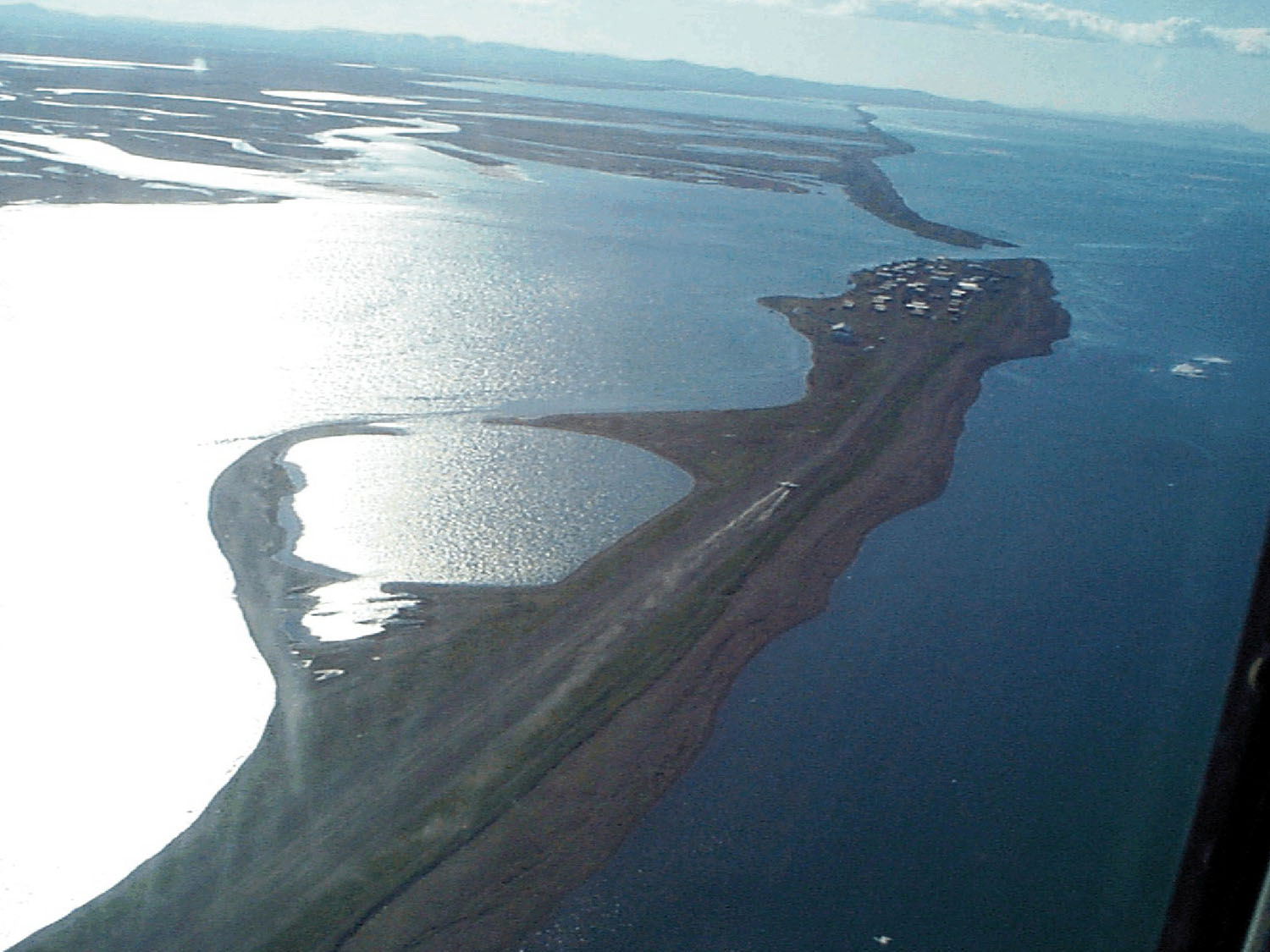
File:Kivalina Alaska aerial view.jpg
Aerial view of Kivalina, Alaska, USA. View is to the southeast.

Kivalina, an Alaskan barrier island 70 miles north of the Arctic Circle, filed suit in the U.S. District Court for the Northern District of California against numerous defendants, including AES Corporation (a Virginia energy company) alleging their emissions of greenhouse gases caused global warming and warmer winters, which in turn affected levels sea ice leaving their island exposed to erosion. AES tendered the suit to its insurer, Steadfast Insurance Company, and Steadfast filed a declaratory judgment action, The AES Corporation v. Steadfast Insurance Company. Steadfast argued there was no “occurrence” under the policy and thus no coverage or duty to defend the climate change complaint.

In the appeal, the court defines "occurrence" the same as an accident, which is an event that creates an effect that is not the natural or probable consequence of the insured’s actions, and is not intended, designed or reasonably anticipated. The court said the inquiry is whether the Kivalina plaintiffs allege the resulting harm (global warming) is a natural and probable consequence of an intentional act (emitting greenhouse gas).  If so, there is no accident here and thus, no coverage. However, if global warming is an unforeseen or unexpected consequence, then it is an accident or occurrence, and there is coverage.  The court said that because Kivalina alleged that there is “clear scientific consensus” that global warming is a natural and probable consequence of greenhouse gas emissions, then global warming is no accident, and thus not an occurrence, meaning no coverage.

In South Carolina, we don't worry too much about sea ice, but if climate change litigation is a trend, it is interesting to guess how our courts may deal with the issue of whether global warming is a "covered occurrence."  You will have to wait until next time for the exciting conclusion!

Share

Twitter Delicious Facebook Digg Stumbleupon Favorites More